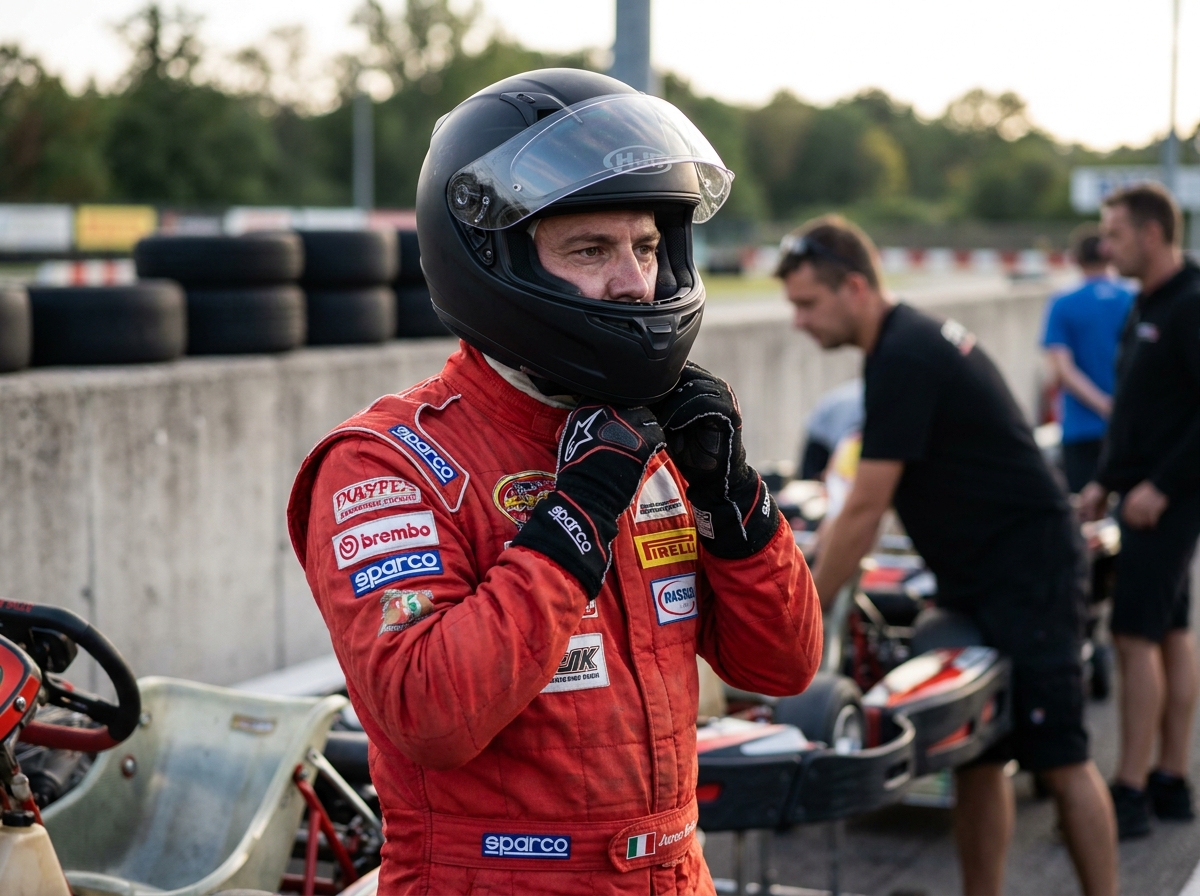
A karting helmet that is too tight compresses the temples after twenty minutes of driving. A helmet that is too light in protection allows impacts that the driver does not see coming. Between these two extremes, the choice of the right helmet depends on specific criteria, not on a feeling in the store.
Helmet certification standards for karting: what changes in 2025
The FIA 8878-2024 standard, recently introduced, targets the specific constraints of karting. It takes into account frequent impacts at relatively low heights, typical of this discipline, with particular attention to face protection and compatibility with neck protections.
Why does this precision matter? Because a helmet certified only for the road (classic ECE standard) or according to old Snell standards may now be refused in karting competitions starting from the 2025-2026 season. A road-approved helmet is no longer sufficient in karting competition.
The Snell K2025 standard, specific to karting, goes in the same direction. It imposes impact tests adapted to real track situations, not to road scenarios. Federations like the FFSA or Motorsport UK regularly remove previously accepted standards from their yearbooks. A driver who buys a karting helmet without checking the current approval list risks ending up with equipment that is unusable in a race.
The direct consequence on the comfort-protection compromise: some helmets that are very pleasant to wear, designed for the general public, are disappearing from the legal options in competition. The choice is narrowing around models designed from the outset for karting.
Helmet ventilation and weight: two factors that alter driving
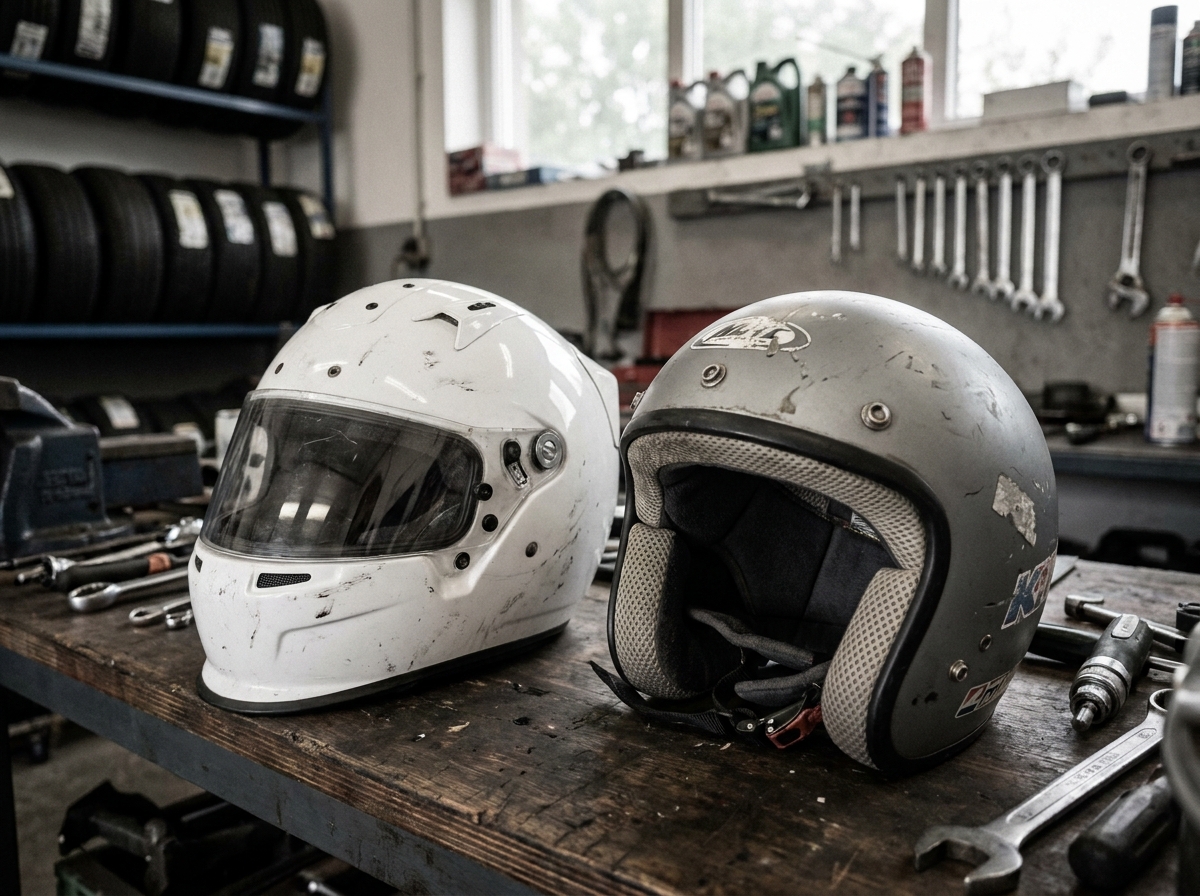
Have you noticed that after several laps, neck fatigue arrives faster than arm fatigue? The weight of the helmet is often the cause. A heavy helmet pulls on the neck muscles in every turn, especially in karting where the direction changes are abrupt and close together.
A lighter helmet reduces neck fatigue and improves concentration. Composite or carbon fiber models offer a notable weight reduction compared to polycarbonate shells, without sacrificing impact resistance. This gain comes at a price, but it is felt from the very first long session.
Ventilation: comfort that influences safety
Ventilation is not a luxury. A poorly ventilated helmet causes a rise in temperature inside the shell, accelerating sweating, fogging the visor, and distracting the driver. In a session lasting twenty to thirty minutes in summer, the difference between a helmet with well-positioned air intakes and a closed helmet results in a measurable loss of clarity in lap times.
Specific karting helmets generally incorporate wider ventilation channels than motorcycle helmets. The reason is simple: speeds in karting are lower, so the natural airflow is less powerful. The vents must compensate for a weaker airflow than in motorcycles.
Fitting a karting helmet: the method to avoid mistakes
A helmet that seems comfortable when placed on the head for five seconds in the store can become torture after ten laps. The fit must be checked under realistic conditions, not during a quick try-on.
The shell should envelop the skull without localized pressure points. The cheeks should be held firmly, without pain. The helmet should not move when shaking the head from side to side. If the inner lining creates a hot spot on the forehead or temples, it means the shape of the shell does not match the driver’s morphology.
- Try the helmet for at least ten minutes before purchase, ideally in a driving position, arms extended in front of you, to simulate the posture at the wheel.
- Check that the peripheral field of vision remains clear: in karting, overtakes often come from the side, and a visor that is too narrow creates a dangerous blind spot.
- Test compatibility with a balaclava or neck tube, especially if you drive in cold weather: a perfect helmet without a base layer can become too tight with a thick balaclava.
The shape of the shell is as important as the size. Some brands offer round shapes, while others offer more oval shapes. Two helmets in size M may not fit the same head.
Visor and field of vision: a neglected criterion that changes the game
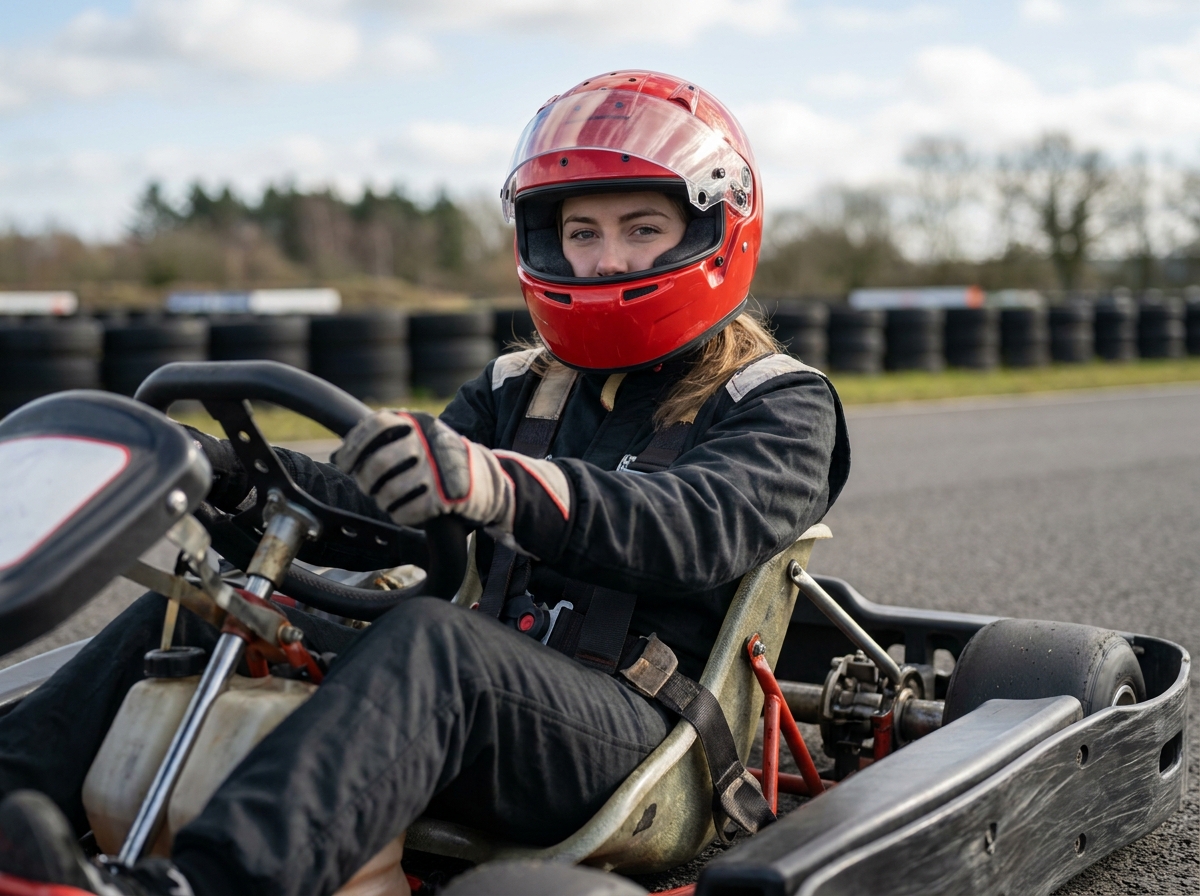
Karting is driven with the eyes. Trajectories are prepared two to three corners in advance, and even the slightest reduction in the field of vision alters distance perception. A full-face helmet with a generous visor opening allows capturing braking markers without excessively turning the head.
The optical quality of the visor also plays a role. A low-end visor slightly distorts contours, which tires the eyes during a long session. Anti-fog treated visors or those compatible with a Pinlock film prevent condensation issues, which are common in indoor karting or in humid weather.
Tinted or clear visor?
Outdoors in bright light, a tinted visor reduces glare. Indoors or at night, it becomes a hindrance. Prefer a helmet with an interchangeable visor system to avoid being limited to a single driving context. Some models allow visor changes without tools, in just a few seconds.
Helmet lifespan and maintenance for karting
A karting helmet does not last indefinitely. The inner foams compress over time, degrading the fit and thus the protection. Most manufacturers recommend replacement after a few seasons of regular use, or immediately after a significant impact, even if no cracks are visible to the naked eye.
- Store the helmet in a protective bag, away from heat and direct sunlight, to preserve the structure of the shell.
- Clean the removable inner foams regularly: sweat degrades materials and can cause skin irritations.
- Inspect the chin strap and its fastening system before each session: it is the most stressed safety point in the event of an impact.
A helmet with compressed foams protects less well than a new helmet, even if the outer shell appears intact. The comfort that decreases over time is a warning sign, not just a matter of feeling.
The balance between comfort and protection is not a fixed compromise. A helmet certified according to current standards, adapted to the driver’s morphology, well-ventilated, and properly maintained ticks both boxes. The real trap is to choose based solely on price or aesthetics, neglecting fit and certification. A serious fitting and a check of the standards accepted by your federation remain the two steps that separate a good purchase from a bad one.