Wallpaper refers to a wall covering that is glued on, made up of a substrate (paper, non-woven, or vinyl) and a printed layer. In 2024, collections are moving away from a purely decorative role to incorporate technical functions and rethought materials, which alters the selection criteria at the time of purchase.
Acoustic wallpaper: a wall covering that absorbs sound
Articles dedicated to wallpaper trends focus on patterns and colors. They overlook a technical evolution that changes the game for living spaces: acoustic wallpaper.
The principle is based on an intermediate layer of foam, felt, or technical textile, inserted between the substrate and the printed face. This structure reduces sound reverberation, a common problem in open interiors or rooms with few textile furnishings.
Manufacturers like ARTE (collection “Acoustic”, catalog 2024) or BuzziSpace (range “BuzziSkin”) already offer these products to professionals. Their uniqueness: they are applied like traditional wallpaper, without requiring an additional underlayer. The general public is gradually gaining access to them, particularly for dressing a home office or an open-plan living room. To explore decor trends on Ma Déco Maison, this type of covering deserves to be compared with purely aesthetic solutions.
Low carbon wallpaper and recycled fibers: what the “eco-friendly” label hides
Many brands display an FSC logo on their packaging. The FSC certification guarantees that the paper pulp comes from sustainably managed forests, but it says nothing about the overall carbon footprint of the product (production energy, transport, inks used).
The low carbon approach goes further than the simple FSC label. The group A.S. Création, one of the largest European manufacturers, published a CSR report in 2023 detailing its strategy: increasing the share of recycled raw materials in the substrate, switching to fully renewable production electricity.
For consumers, this means that “eco-friendly” wallpaper can cover very different realities. Here are a few points to check before purchasing:
- The composition of the substrate: a non-woven made from recycled fibers has a lower impact than a classic expanded vinyl, but its moisture resistance also differs
- The type of inks: water-based or plant-based inks limit the volatile organic compounds (VOCs) released into the room after installation
- The place of manufacture: wallpaper made in Europe reduces transport compared to printing done in Asia, even if the design is sold by a French brand
Nature patterns and panoramic wallpaper: how to choose the right format
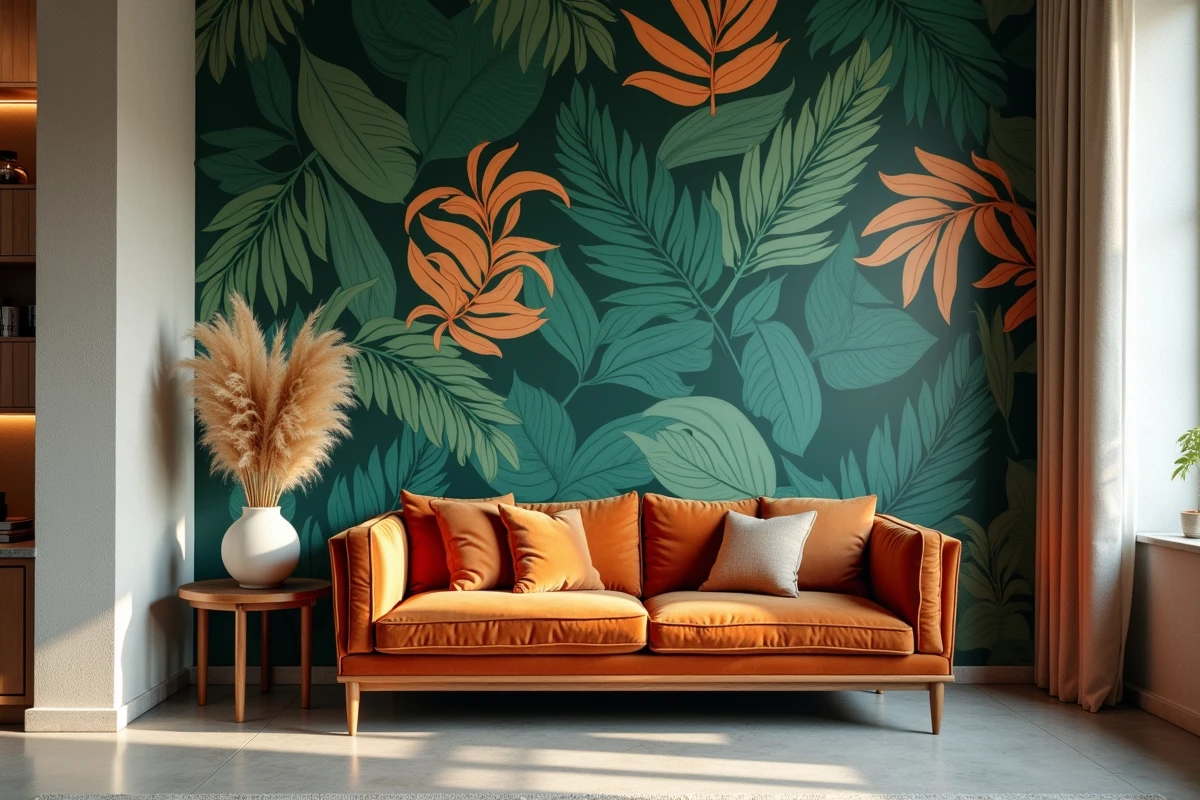
Nature-inspired patterns (jungle, landscape, flowers, forest) dominate the 2024 collections. The panoramic wallpaper, which covers an entire wall with a unique scene without visible seams, is the most requested format in this category.
The difference between a panoramic and a repetitive pattern wallpaper (known as “all over”) is not limited to aesthetics. The panoramic is custom-made, with numbered strips that fit together in a specific order. An installation error on a single strip misaligns the entire image.
Panoramic or single strip: adapting the choice to the room
A panoramic works on a clear wall, without outlets or switches in the center of the scene. In a kitchen or bathroom, a repetitive vinyl pattern withstands splashes better than an untreated non-woven panoramic.
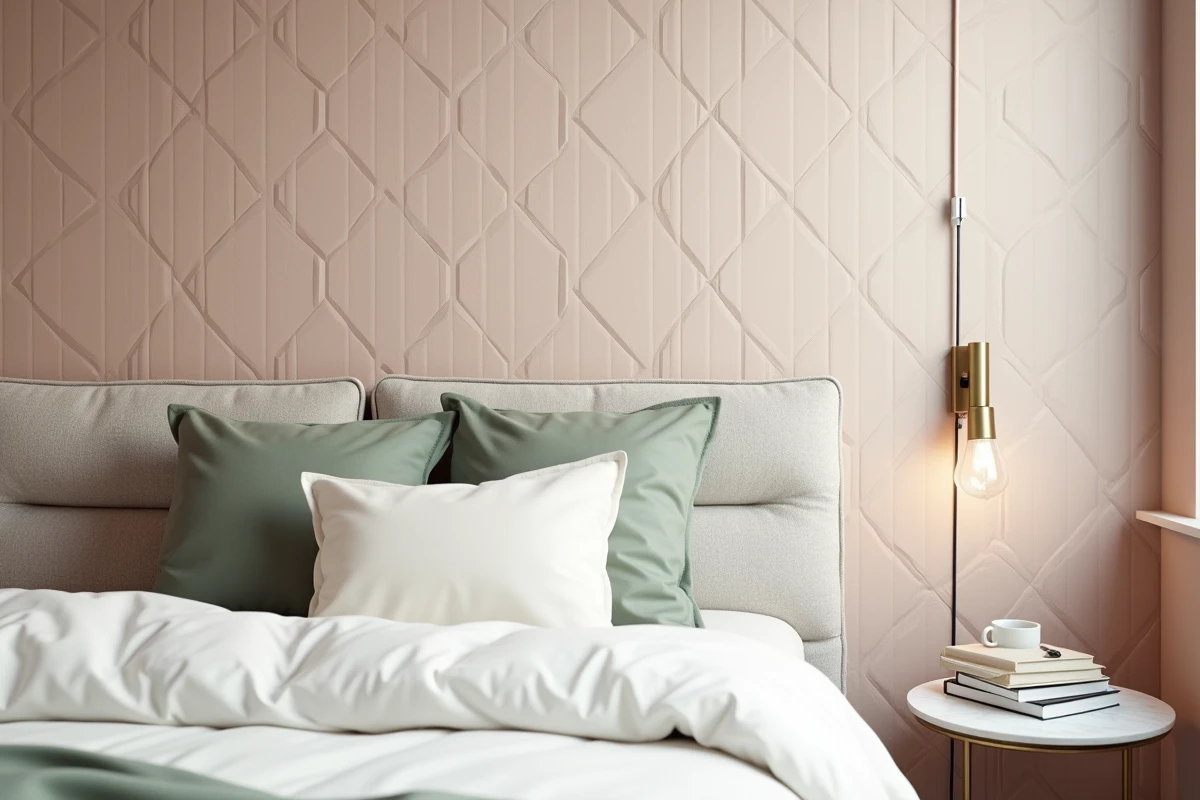
Soft colors (beige, sage green, muted terracotta) remain the most used in 2024 for nature decor. Abstract wallpapers, with solid colors and soft geometric shapes, represent an alternative for those who want an accent wall without a figurative pattern.
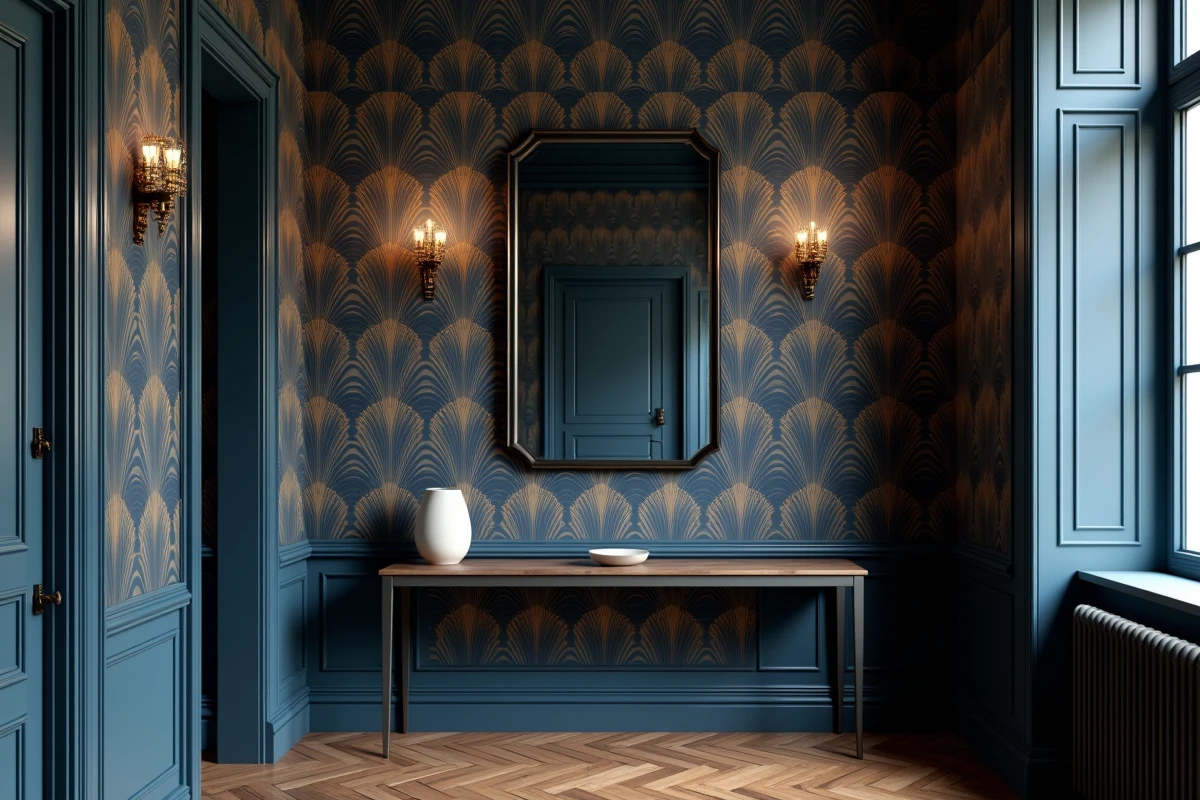
Textured wallpaper: the return of relief as a decoration criterion
Textured wallpaper adds a tactile dimension to the wall. There are two main families:
- Printed textures, where the relief is simulated by a play of shadows and gradients on a smooth substrate (lower cost, installation identical to classic wallpaper)
- Physical textures, obtained through embossing, flocking, or adding materials (linen fiber, fine sand, microbeads). The result is richer, but installation requires suitable glue and pasting the wall rather than the strip
- Hybrid textures, combining a printed background with a slight embossed relief, offering a compromise between visual appeal and ease of installation
Textured wallpaper hides the imperfections of an uneven wall much better than smooth or satin wallpaper. On an old wall with slight cracks or variations in flatness, an embossed non-woven avoids excessive preparation work.
Matte finishes dominate the 2024 collections, with shiny or metallic aspects reserved for occasional touches (door frame, niche). This surface sobriety aligns with the general trend towards interiors with natural colors and raw materials.
The choice of wallpaper in 2024 relies as much on its technical properties (acoustic, composition, texture) as on its pattern. Checking the substrate, the type of ink, and the format suitable for the room before being guided by the decor remains the best way to avoid a disappointing purchase upon installation.