The choice of a color palette is not limited to pairing two colors from a color chart. A successful wedding decoration relies on a cohesive visual work between the reception venue, the available natural light, and the materials used on each surface, from the table to the ceiling.
Color palette and room decoration: working with existing light
We recommend always visiting the reception hall at the time of the ceremony or dinner. A powdery shade that looks stunning under zenithal lighting can appear dull in a room with narrow north-facing windows.
The principle is simple: adapt the saturation of colors to the brightness of the venue. In a very bright space, desaturated tones (linen, greige, sage) work effortlessly. In a darker room, you need to dare to use bolder accents (terracotta, deep burgundy, teal) and compensate with well-thought-out accent lighting, filament garlands, or numerous candles.
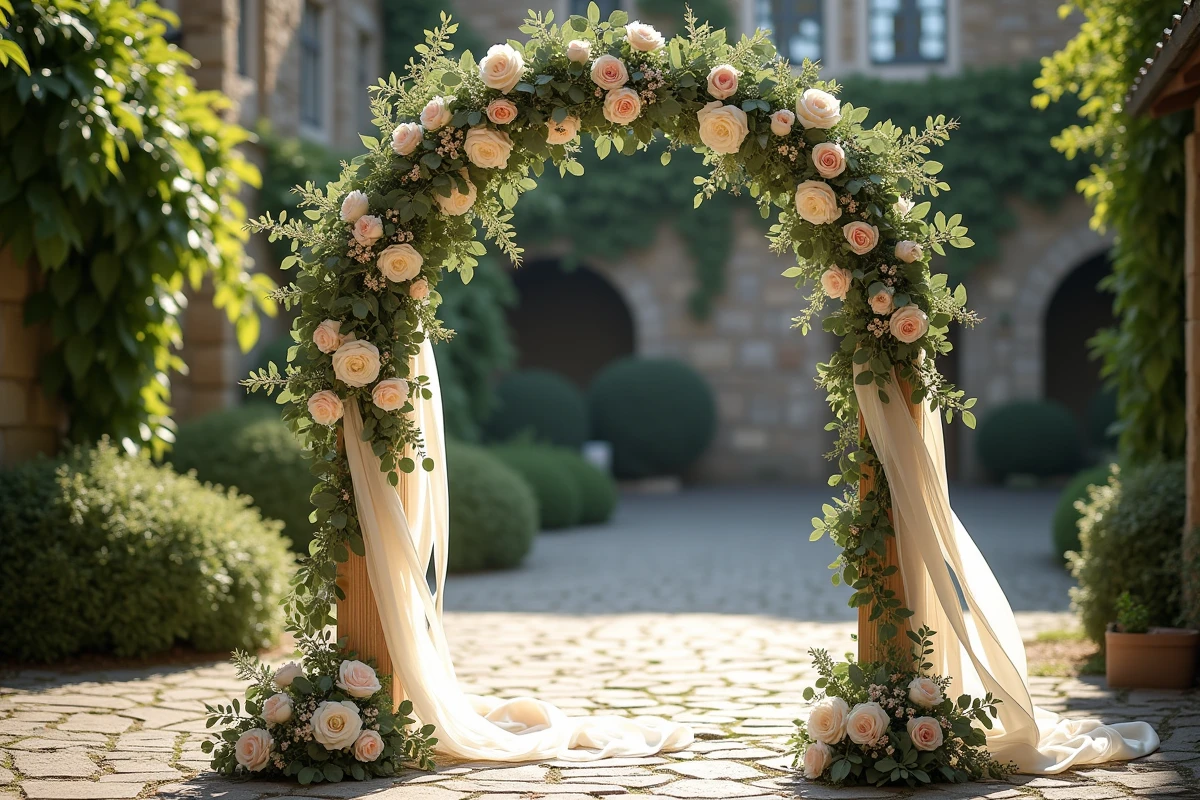
Wall decoration is often overlooked. Instead of draping meters of tulle, we see better results with targeted installations: a green wall located behind the bride and groom’s table, or a floral arch repositioned from the ceremony site to the reception hall. This type of centerpiece structures the space and provides a focal point for photographers.
The resources available on Mariage et Décoration allow you to explore combinations of shades and materials suitable for different types of venues.
Table decoration: prioritizing elements to avoid overload
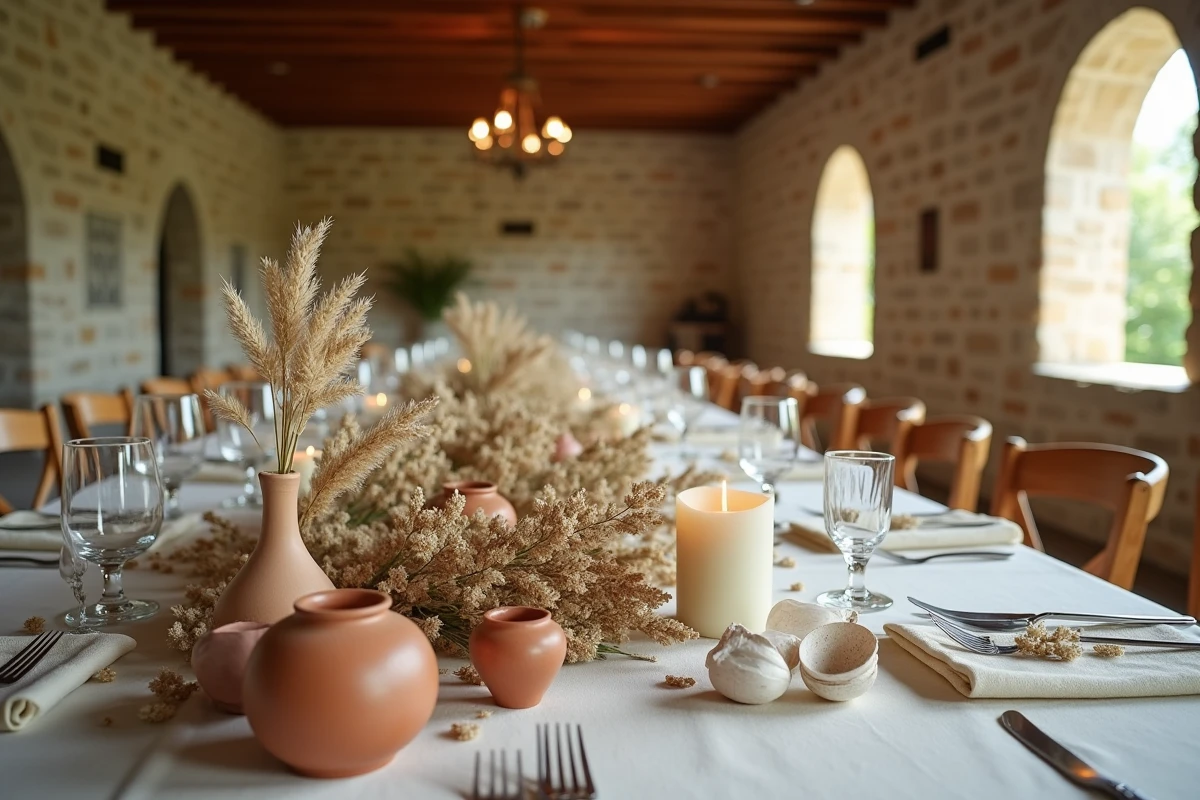
The reception table is the decorative support most scrutinized by guests. The classic trap is to accumulate table runners, printed menus, place cards, candle holders, small vases, and guest favors on a surface that must also accommodate plates, glasses, and cutlery.
A well-decorated table leaves at least one-third of its surface free. To achieve this, prioritization is necessary. We distinguish three levels:
- The centerpiece (bouquet, low floral arrangement, or lantern) that sets the tone and should not exceed the line of sight of guests seated across from each other
- Functional elements repurposed as decoration: napkins folded in a contrasting shade, a calligraphed menu on a reusable support (stone, wood slice, plexiglass)
- Small accents placed sparingly, dried petals, sprigs of baby’s breath, or tea light candles, which fill the gaps without cluttering
The choice of floral container deserves attention. A transparent cylindrical vase with a small diameter is inexpensive, easily found in bulk, and allows for varying compositions from one table to another with the same flowers. This is more effective than a single centerpiece model reproduced identically everywhere.
Flowers and foliage: composing a bridal bouquet consistent with the decor
The bridal bouquet provides the floral vocabulary for the entire decoration. Starting from the bouquet to then develop the table arrangements, boutonnieres, and arch elements ensures a visual unity that guests perceive without naming it.
Practically speaking, mixing fresh flowers and dried foliage in the same bouquet works, provided that the dry stems are stabilized with floral tape to prevent them from breaking during the day. Dried eucalyptus, thistles, and small-scale pampas grass lend themselves well to this mix.
For a vintage theme, we favor English roses with dense petals, dahlias, and ranunculus, paired with fern or trailing ivy. For a more contemporary style, anthuriums, phalaenopsis orchids, or calla lilies structure the bouquet with fewer stems.
Floral DIY: what really works
Floral DIY appeals to many future brides and grooms for budgetary reasons. The result depends entirely on preparation. Receiving the flowers two days prior and conditioning them in a cold room (or a cool room if necessary) makes the difference between vibrant compositions and wilted petals by dessert time.
Robust flowers suitable for DIY:
- Carnations, very resilient out of water for several hours, available in a wide range of colors
- Chrysanthemums (spider or pompon varieties), inexpensive and voluminous, which quickly fill a vase
- Baby’s breath, easy to handle, which dries on the stem and remains presentable even at the end of the evening
Peonies and hydrangeas, on the other hand, require constant hydration and do not tolerate amateur arrangements without soaked floral foam.
Vintage or rustic theme: choosing a guiding thread without falling into cliché
A decorative theme is not just a keyword on a Pinterest board. The guiding thread must translate into concrete choices of materials: raw wood and burlap for a rustic wedding, patinated brass and velvet for a vintage 1920s style, polished concrete and smoked glass for an industrial look.
The most common mistake is layering thematic markers without material coherence. Lace tablecloths combined with driftwood centerpieces and transparent resin chairs create visual noise that cancels out the desired effect.
We recommend limiting the palette of materials to a maximum of three. For a vintage theme, for example: washed linen for textiles, amber-tinted glass for containers, and brass for small hardware (place cards, table numbers). This discipline is enough to create an identifiable atmosphere without accumulating accessories.

The decoration of a wedding always benefits from being thought of as a whole rather than as an addition of details. Three well-chosen materials, a bouquet that interacts with the tables, and a room lit according to its palette: it is on these technical foundations that the most original ideas take shape.