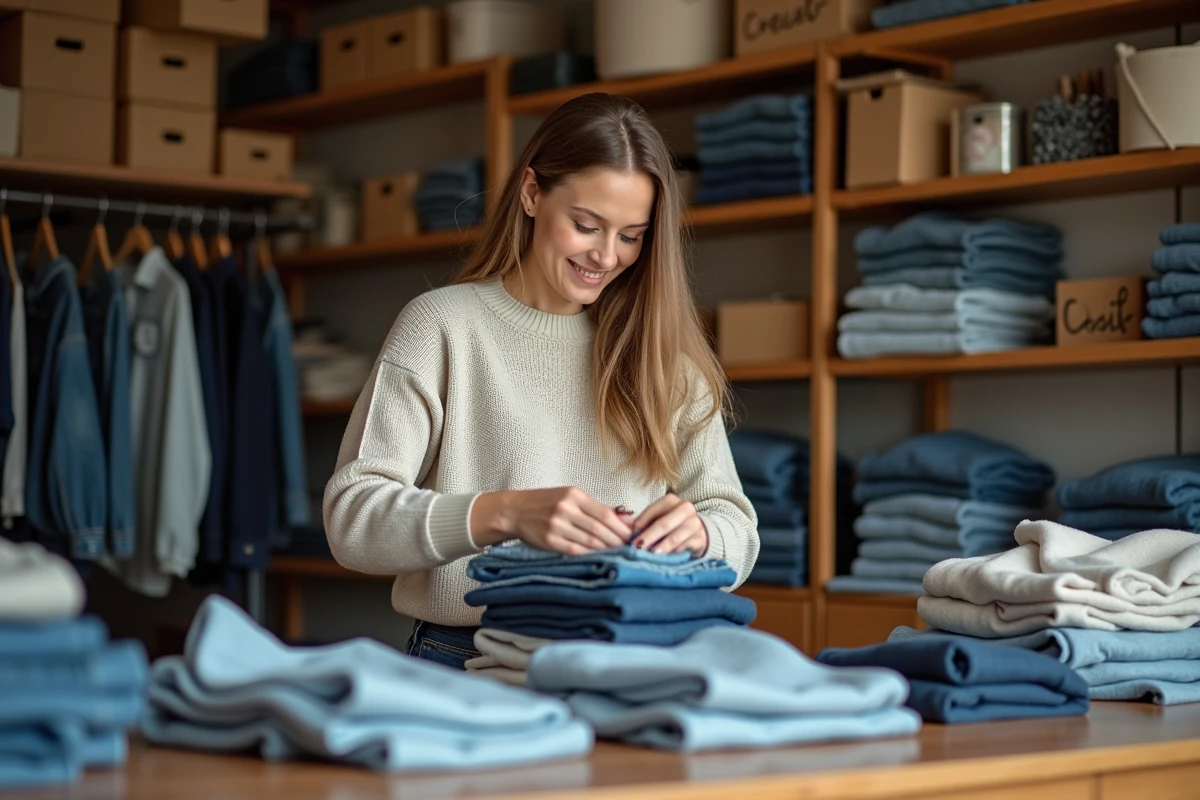
The legal framework allows, under certain conditions, the recovery of unsold clothing, thus circumventing the obligation of destruction that has long prevailed in France. However, many stakeholders continue to ignore existing provisions, either due to a lack of clear information or fear of overly complex logistics.
Digital platforms have emerged to simplify redistribution, while local associations are multiplying concrete actions to reintroduce these overlooked garments into circulation. Recovery channels are reinventing themselves, offering direct solutions to those who wish to effectively tackle textile waste.
Textile Waste: Understanding the Issues to Act Better
Refusing to acknowledge the scale of the disaster is no longer possible: the textile industry ranks second on the global podium of polluters. The figure reported by ADEME sounds an alarm: every second, the equivalent of a bin full of clothing ends up in the trash. Overproduction multiplies dormant stocks and unsold items waiting to be burned in warehouses. Since the implementation of the AGEC law in 2022, the destruction of unsold non-food items is no longer a legal option. Textile stakeholders thus find themselves facing their responsibilities.
The impact is far from limited to textile pollution. The extracted fibers, the liters of water consumed, the greenhouse gas emissions: all of this adds to the environmental and social bill. According to various sources, 4 to 5% of textile production will never find a buyer. A hemorrhage that resonates at a time when responsible consumption remains far behind the infernal gear of fast fashion.
Certainly, Europe is trying to shift towards a logic of circularity. But the transformation is happening slowly. Yet, everyone can get involved by adopting simple daily gestures. Here are some concrete alternatives:
- reselling unused clothing instead of letting it sit
- donating pieces that are no longer used to associations or acquaintances
- opting for repair and giving a second life to items that are still in good condition
- imagining new uses through upcycling
- directing worn textiles towards suitable recycling circuits
There are resources to support this approach, such as tips for recovering unsold items that open the door to more sober and solidarity-based practices in the face of this organized waste.
It is impossible to rely solely on individual will: the challenge remains collective, every link counts. While ADEME’s surveys provide an unyielding state of affairs, the shift towards more sensible fashion depends on the awakening of all stakeholders.
How to Easily Recover Unsold Clothing? Tips and Concrete Advice
The implementation of the AGEC law has renewed the possibilities of accessing unused stocks of clothing. Now, artisans, creators, engaged individuals, or simple private citizens can seize these opportunities. Valorization platforms have emerged: they facilitate navigation through this surplus maze by providing access to new textiles from major brands, all at advantageous prices. It is impossible to overlook when the goal is to feed ethical fashion or encourage circularity.
Donating remains a solid lever to avoid forgetting items in warehouses. Emmaüs, Le Secours Populaire, La Croix-Rouge: these associations collect, redistribute, and inject a solidarity dynamic throughout the year. Professionals, on the other hand, focus on recycling and upcycling to transform these garments into materials or original pieces, thus avoiding outright waste.
Getting into upcycling with a needle or sewing machine adds another string to the bow of recovery. Repair workshops and repair cafés allow everyone to rediscover the satisfaction of working on pieces. Many collectives also organize direct sales or dedicated events, offering the opportunity to leave with quality fabrics or transformed garments from previously unsold items.
For those who want to take action, several paths are available:
- Finding specialized textile recovery platforms to locate stock for valorization
- Contacting a local association and getting involved in redistribution circuits
- Joining an upcycling or repair workshop to learn how to transform leftovers
Here, there’s no need to be an expert. Recovering unsold clothing is primarily the concern of practical people determined to give a future to what would have ended up burned or forgotten.
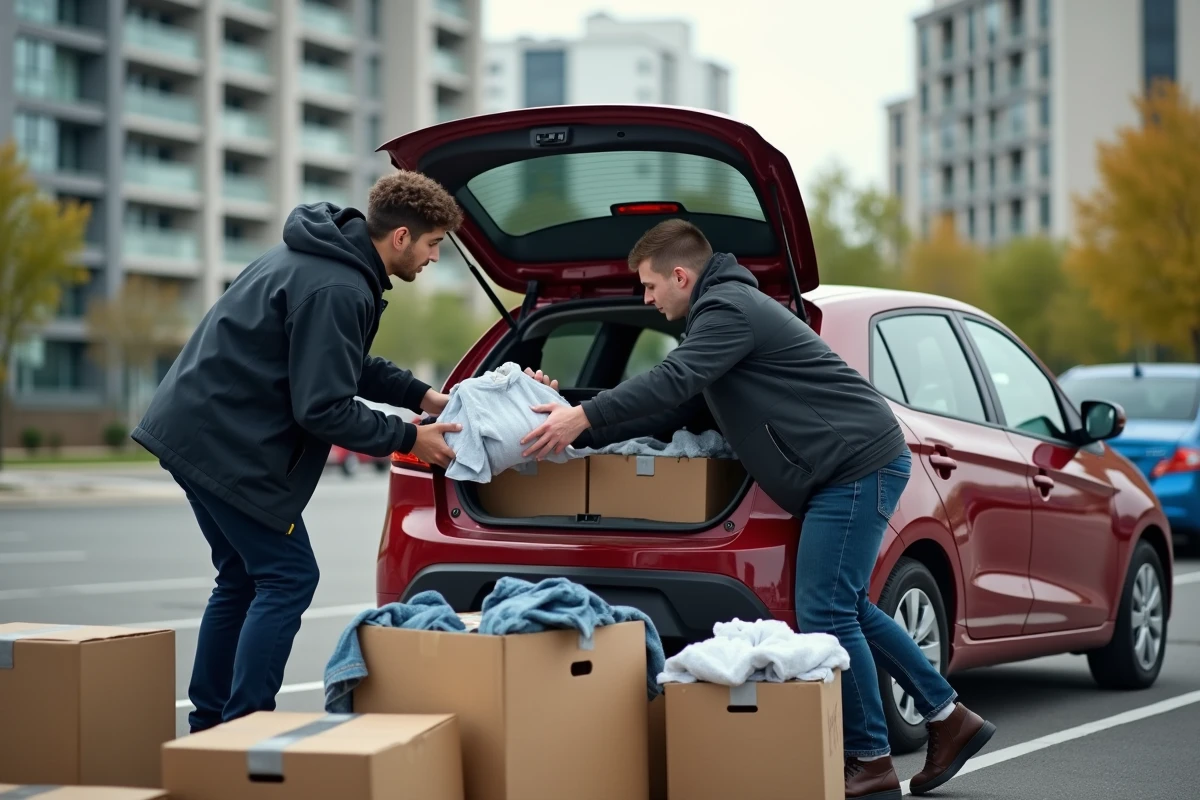
Local Initiatives, Apps, and Solidarity Networks: Accessible Solutions to Give Clothes a Second Life
Across France, cities like Paris, Roubaix, and Lyon are inventing new ways to circulate these dormant stocks. In Paris, the Sentier reaffirms itself as a textile district by fully committing to ethical fashion: collectives are transforming the approach, and shops are embracing circularity. In Roubaix, the Fashion Green Hub brings together creators and curious individuals in a former factory, now a hub where upcycling and shared creation replace the logic of disposability.
In Lyon, platforms like Feat. coop, Adapta, and La Trouvaille are emerging: all addresses where you can find fabrics, leathers, and accessories from unsold stock, both in physical spaces and online. These solutions accelerate the adoption of new reflexes to limit pressure on resources.
Here’s an overview of the strategies and initiatives shaping the fashion of tomorrow:
- Professional trade shows like Première Vision or Texworld Evolution Paris create dedicated spaces for recyclable recovery and circular sourcing: professionals and amateurs can acquire overproduced materials
- Association networks organize collections, repair workshops, and solidarity markets, multiplying entry points into the virtuous circle of reused textiles
Through these networks, genuine solidarity ties are woven between manufacturers, volunteers, and local residents. Recovering what seemed doomed becomes a concrete, tangible act, a form of ordinary resistance. It is up to everyone to grasp the outstretched hand so that, tomorrow, unsold textiles tell a completely different story, that of a second chance.