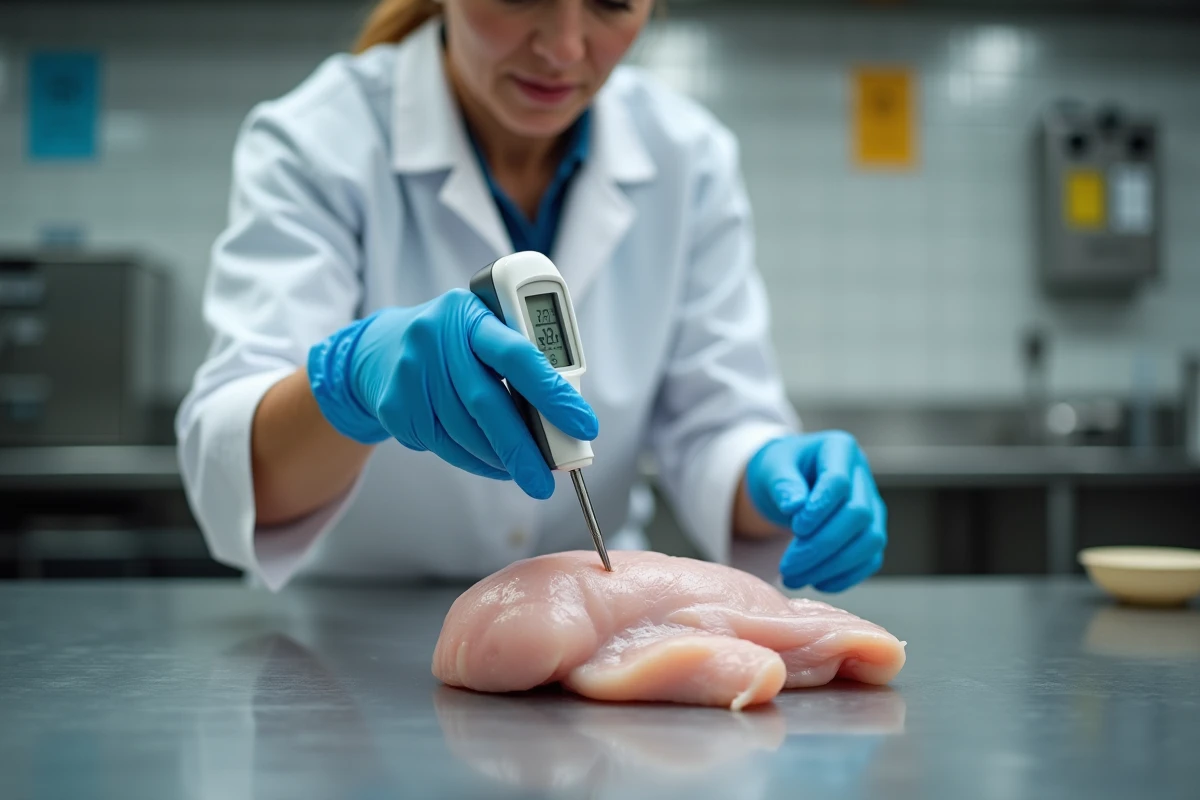
In food production environments, measuring the temperature of goods is not just about cooking comfort. The thermometer used on a production line must meet requirements that domestic equipment ignores: resistance to intensive cleaning protocols, compatibility with foreign body detectors, and documented traceability for audits. Choosing a detectable food thermometer ensures both regulatory compliance and measurement reliability.
Detectability of the food thermometer: what standards require
The concept of detectability refers to an instrument’s ability, in case of breakage or loss on the line, to be detected by a metal detector or an X-ray system. Bodies, caps, clips, and tips must be made of detectable plastic or resin so that no fragment goes unnoticed in a batch of finished products.
This requirement is part of private food safety standards such as BRCGS Food and IFS Food. These standards mandate that any object likely to come into contact with the product or fall into the production area must be identifiable by end-of-line inspection equipment. A conventional thermometer, even of good quality, does not meet this criterion: its standard plastic casing becomes an undetectable physical contaminant if it breaks.
Choosing a detectable food thermometer requires verifying that all components, including seals and any protective caps, are certified detectable. A single non-compliant element is enough to create a gap in the foreign body control plan.

Probe thermometer or infrared sensor: which type of measurement for which control
The choice between a probe thermometer and an infrared sensor is not just a budget question. It depends on what you are looking to measure and the point in the chain where the control takes place.
Probe thermometer for internal temperature
The probe thermometer remains the only reliable means of measuring the core temperature of a product. Whether receiving raw materials or at the end of cooking, it is the internal temperature that determines sanitary compliance. The probe must be inserted at the geometric center of the piece, where cooling or heating is slowest.
A positioning error of a few centimeters can skew the reading. On a thick piece of meat, the difference between the peripheral area and the thermal core can easily reach several degrees. The repeatability of the measurement depends as much on the operator’s technique as on the device’s precision.
Infrared for quick surface checks
The infrared thermometer measures surface temperature without contact. It is suitable for quick checks in storage areas, on closed packaging, or work surfaces. However, it provides no information about the internal temperature of a food, which limits its use to supplementary checks.
The reliability of the infrared reading depends on the emissivity of the targeted surface. Shiny or reflective materials (plastic films, metal surfaces) generate notable discrepancies. In the food context, infrared serves as a first line of control, never as a reference measurement to validate a critical HACCP point.
Calibration and traceability: the thermometer as an auditable measuring instrument
A professional food thermometer is not a one-time purchase. It is a measuring instrument integrated into the HACCP plan, subject to periodic verification obligations and documented traceability.
- Each device must be identified by an inventory number and associated with a verification log that records calibration dates, observed deviations, and corrective actions taken.
- Calibration ideally occurs at two reference points (melting ice and boiling water, or certified temperature-controlled bath), allowing for the detection of linear drift of the probe.
- BRCGS and IFS standards require that the traceability of maintenance and calibrations be available during each audit, under penalty of major non-compliance.
The drift of a thermocouple or thermistor sensor develops gradually. Without regular verification, a device can display an increasing deviation for months without the operator noticing. Field reports vary on the optimal recalibration frequency, but quarterly checks provide a reasonable basis for most production environments.
Cleanability and hygienic design of the food thermometer
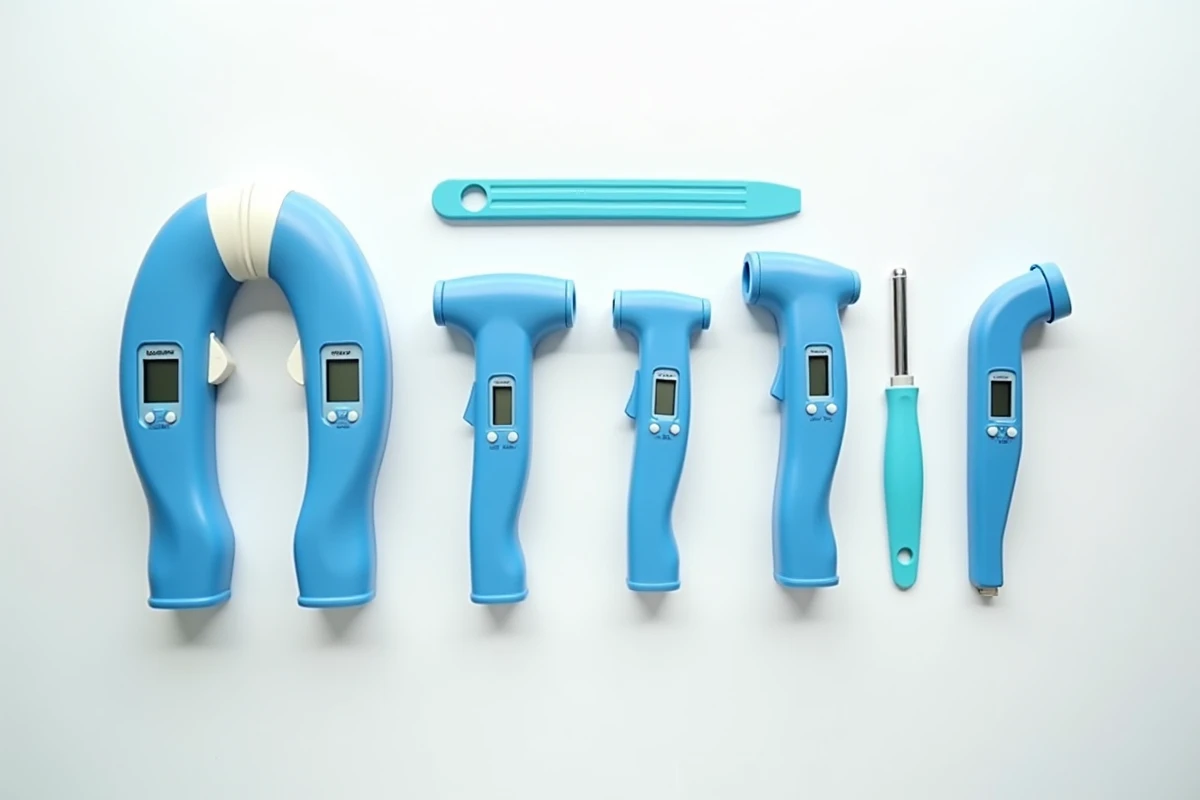
The hygienic design of a food thermometer goes beyond IP sealing. The absence of recesses, visible seals, and areas that retain organic material determines the instrument’s ability to withstand daily cleaning cycles without becoming a vector for cross-contamination.
A probe thermometer intended to pierce several different batches of products must be disinfected between each use. Models with a sealed probe-body junction are more resistant to pressurized water splashes and chlorinated solutions than those with a removable probe with an exposed connector.
The recent trend towards “paperless” HACCP, with automatic digital recording of readings, pushes manufacturers to integrate data transmission functions (Bluetooth, NFC) into casings that must still comply with industrial cleaning constraints. A connected thermometer that cannot withstand a standard disinfection protocol loses all relevance in production.
The choice of a detectable thermometer for professional food use hinges on four simultaneous axes: certified detectability of all components, suitability of the sensor type for the intended control, rigor of the calibration program, and actual resistance to cleaning conditions. Neglecting any one of these axes weakens the entire sanitary control system.