When thinking about digital creation in France, the names that often come to mind are linked to Paris, Lyon, or Marseille. Brittany is rarely mentioned among the driving territories of contemporary digital art. Trixhentzi changes this perception by establishing a creation and distribution facility directly in rural Brittany, far from the usual circuits.
Fablab, XR studio, and artist residency: Trixhentzi’s hybrid setup in rural Brittany
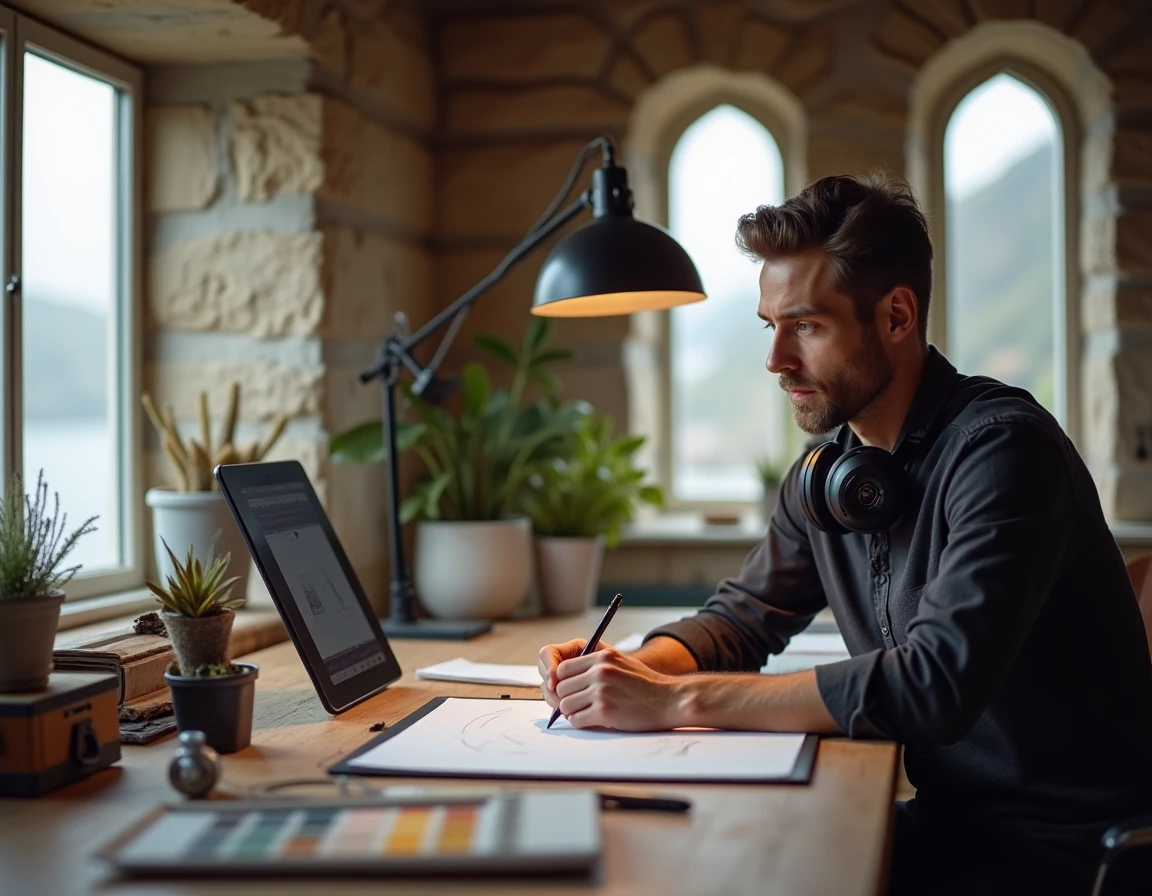
What sets Trixhentzi apart from traditional support structures for creation is the combination of three tools in one location. The resident artists have access to a residency space, a fablab, and an XR studio dedicated to immersive experiences. This combination allows for moving from prototype to finished work without leaving the site.
The fablab provides access to digital fabrication machines (cutting, 3D printing, electronics). The XR studio, on the other hand, opens the door to virtual and augmented reality. An artist can model a three-dimensional sculpture in the morning, test it in immersion in the afternoon, and then adjust its parameters in the fablab the next day.
As detailed in Trixhentzi’s influence on BreizhPower – The 100% Breton magazine, this integrated approach prevents creators from having to travel between specialized workshops, often concentrated in major cities.
Have you noticed that most digital artist residencies are located in urban areas? Trixhentzi takes the opposite approach by establishing itself outside the Breton metropolises, with a clear goal of decentralization. The idea is not to flee the city out of posture, but to offer a working environment where the long process of creation does not compete with the urban pace.
Outreach beyond the walls: exhibiting digital art in Breton community halls and libraries
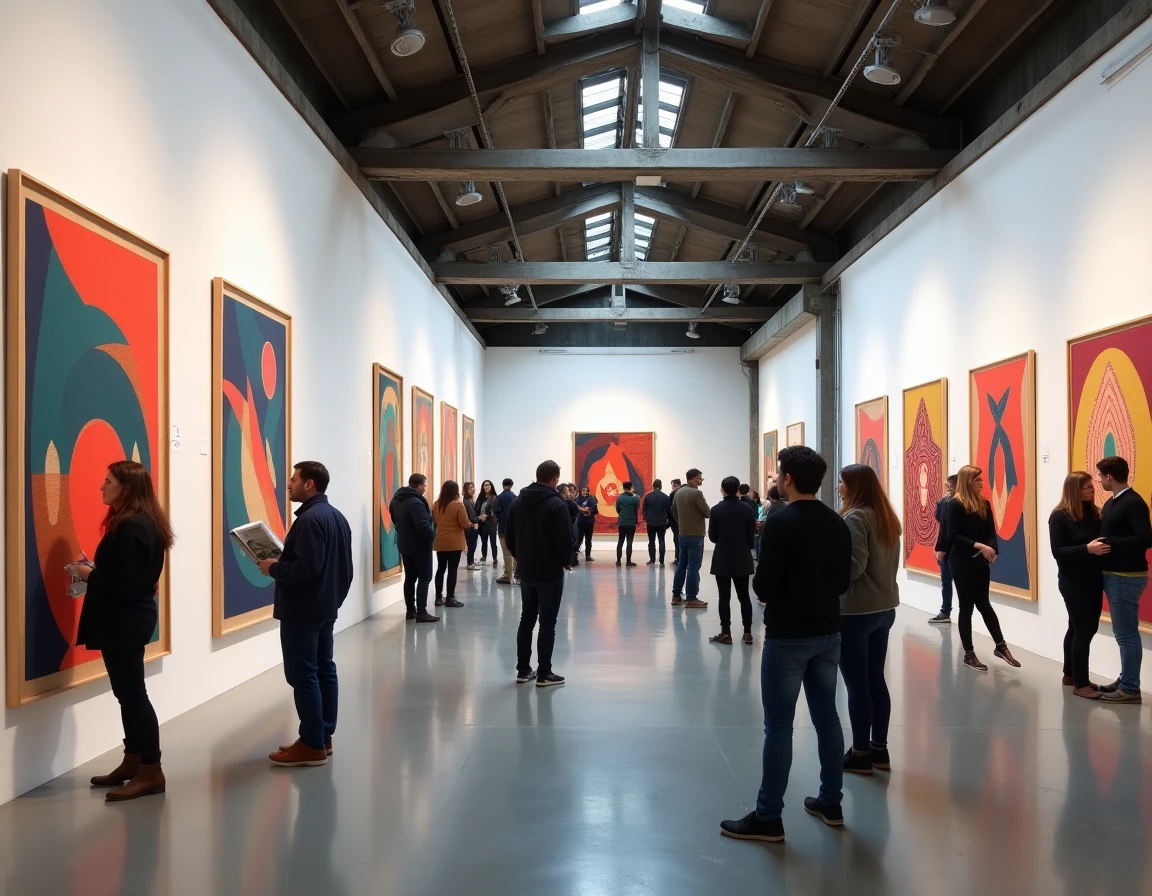
Producing digital works in rural areas is not enough if they are only visible in major art centers. Trixhentzi has developed a logic of regional tours adapted to small municipalities.
Specifically, the installations are designed to function in non-art dedicated spaces: community halls, libraries, and associative third places. Each work is conceived with its technical constraints (limited electrical supply, absence of black box, reduced space) and its own mediation.
Adapting the work to the location rather than the reverse
This constraint modifies the creation process itself. An artist who knows their installation will be shown in a rural library integrates practical parameters from the start:
- Transportable format and quick setup, without heavy technical teams
- Integrated mediation within the work (texts, sounds, interactions) for audiences who are not used to galleries
- Reduced energy and material consumption, compatible with modest infrastructures
This “outreach” diffusion model reaches audiences distant from traditional artistic circuits. Contemporary digital art steps out of its insularity to meet residents who would never have entered a metropolitan art center.
Professionalization of Breton digital artists: mentoring and continuous training
Beyond production and distribution, Trixhentzi structures a support pathway for digital creators in the region. This aspect is often absent from existing structures, which limit themselves to providing a workshop.
A mentorship rooted in practice
The program relies on a system of continuous mentoring between established and emerging artists. The exchanges are not limited to aesthetic advice. They also cover project management, funding searches, negotiations with distribution venues, and documentation of works for calls for projects.
Why is this professional aspect so important? Because a digital artist works with expensive tools, rapidly evolving software, and unusual exhibition formats for many cultural programmers. Without structured support, the risk is to produce technically accomplished works that are impossible to show or sell.
Training on tools and networks
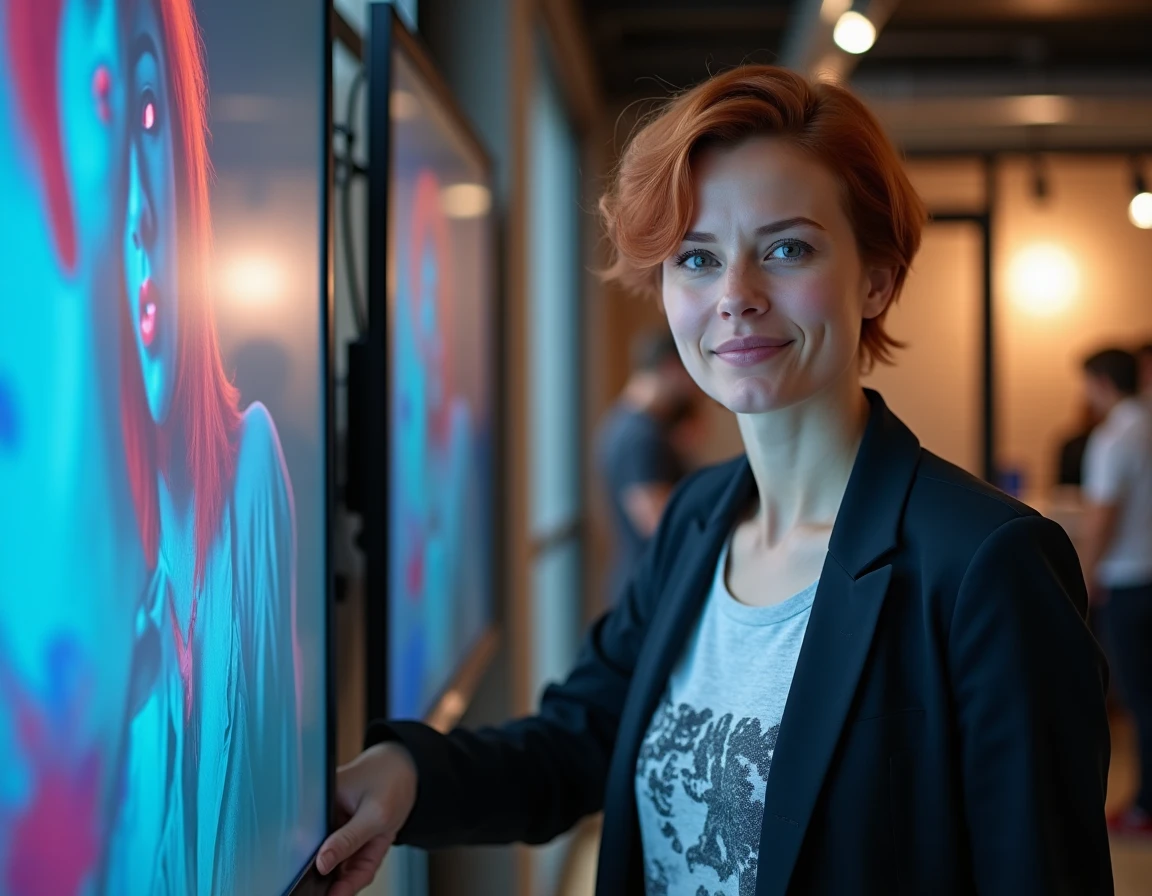
The program also includes training sessions on emerging technologies (extended reality, additive manufacturing, volumetric capture). These trainings do not aim to turn every artist into an engineer. They provide sufficient basics to communicate with technicians and make informed choices about creation tools.
- Practical workshops on 3D modeling software and real-time engines
- Collective sessions for critical feedback on ongoing projects
- Networking with other cultural structures in Brittany and beyond
Digital art in Brittany: a reproducible model for other rural territories
Trixhentzi’s program raises a question that goes beyond Brittany. Can digital creation develop sustainably outside major cities? The initial results suggest that yes, provided three elements are brought together: an equipped location, a local distribution strategy, and professional support.
This model interests other rural territories in France facing the same observation: digital artists are leaving for the metropolises due to a lack of production means and visibility. The logic of regional tours, combined with a strong territorial anchoring, offers a credible alternative to Parisian circuits or online platforms.
The strength of Trixhentzi also lies in its refusal to separate creation and mediation. Each work produced within the program is designed to engage with an audience, not to remain in a digital portfolio. Contemporary digital art gains relevance when it is rooted in a territory and addresses real people rather than an abstract market.